We knew that the Galaxy S 4 would have two different versions coming out. One will house the new Exynos Octa-core processor and the other will carry the quad-core Snapdragon 600 series. While some expected, and others hoped, that the UK would see the Exynos version, that appears to not be the case. According to Samsung the UK will see the Snapdragon variety. When questioned by various UK blogs they were quoted to say:
“Samsung Galaxy S4 is equipped with a 1.9GHz Quad-core AP or a 1.6GHz Octa-core AP. The selection of AP varies by markets … In the UK, the Galaxy S4 will be available as a 4G device with a 1.9GHz Quad Core Processor.”
While most of you may not notice the difference in your day to day use of it, it certainly does deflate the “my phone can beat up your phone” argument. For those of you across the pond, does it affect you decision to buy the device? Sound off below.
Around the summer of 2010, my contract was coming to an end and the HTC EVO 4G on Sprint was very appealing. Touted as “America’s first 4G phone”, it featured a large display and great specs at the time. I desperately wanted this phone and every Sprint store, Radioshack, or online store, was out of stock for four to six weeks. With my contract ending in just a couple weeks, the options were simple: Either buy the EVO 4G for full price and then some due to demand, or just grab a Blackberry. Unfortunately, an outdated BlackBerry Curve it was.
In the Spring of 2011, I finally got my hands on a slightly used EVO 4G. It was a great investment and I was even using it up until the fall of last year before I was due for an upgrade, going with the Samsung Galaxy S III. Fast forward to now and HTC has taken quite a hit because it doesn’t have quite the zing or product support as we’d seen in the past. In fact, over the last several years, declining profits and market share have pushed the Taiwanese company further down the list. Earlier this year, CEO Peter Chou blamed poor marketing as the reason for their decline. However, he said the same thing last year and nothing really changed.
Samsung has quickly grown to be the world’s number one Android manufacturer, capturing a massive 40% of all Android smartphones and tablets. They capitalized on HTC’s poor marketing and lack of clear vision with a product line. In 2012 alone, Samsung spent $401 million advertising its mobile devices in the US. In today’s marketplace, great devices do not sell themselves: great marketing does. By comparison, HTC cut its advertising budget by 45%. It’s pretty clear that Samsung’s advertising push is paying off, then again, they’re selling devices like hotcakes which makes it much easier to invest so much money. What makes Samsung’s latest flagship device particularly appealing isn’t the specs but the software features.
At Unpacked 2013, the South Korean giant really pushed its new software features from Smart Scroll eye-tracking technology to new sensors that work with S Health to help users stay more active. When you break it down, the Galaxy S 4 and HTC One have very similar specs: 1080p HD display, quad-core processor, 2GB RAM, up to 64GB of storage, and so on. In all reality, trying to sell the One based on specs and quality isn’t going to cut it. HTC announced a slew of new features as well and they need to utilize those as selling points. I personally think the One is a higher quality phone as opposed to the Galaxy S 4, but consumer’s are going to buy the phone that gives them the most features. Samsung clearly wins in that category, and is something HTC needs to change in the near future.
The One seems to recapture the special feeling the EVO 4G had and with its interesting features such as Zoe and Boom Sound and that’s what mainstream consumers really care about. This is where their focus needs to be instead of bashing Samsung in some desperate attempt to grab attention. At this stage of the game, HTC simply can’t revert to their old ways of talking and not doing. With the One hitting US carriers towards the end of March and the Galaxy S 4 not launching until the end of April, they do stand a chance of selling a good amount before the inevitable rush of Samsung fans upgrade. However, HTC might not have enough new features to attract enough consumers.
Can HTC recapture the consumer’s attention? It’s anyone’s guess at this point. Maybe Peter Chou is serious this time. While highlighting the One’s features are important, one can’t forget that it all comes down to marketing. Sure, HTC isn’t profiting hand over fist, but they’ll have to reach deep into their pockets to make it happen, and I hope they do.
Blues music is supposed to be cathartic — a way to process and package pain in ways that make it palatable; to take our hurt and ache, set it outside ourselves, give it a tune and rhythm that makes it tangible and real yet somehow less terrifying.
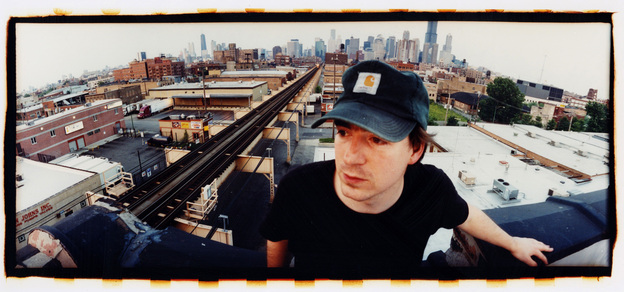
Jason Molina, who died Saturday at 39, of what his label, Secretly Canadian, calls natural causes, wasn't a blues singer, exactly. In a prolific underground career spanning more than 15 years, his songs mostly took on the form of confessional folk music — a man and a guitar, or a man and a band, singing bruised and barren songs of longing and lost salvation like so many others before and since.
He recorded under a variety of names — his own, Songs: Ohia and Magnolia Electric Co., to name a few — but in all, he wrote in his own unique symbolic shorthand. The moon, for example, lurked in countless Molina songs as a figure of both menace and light. In one of my favorites, the 2006 solo song "Get Out Get Out Get Out," he sums up so much of his work and worldview with a string of elegant laments: "Something must have happened to both of us / Something must have happened, something always does ... I lived low enough so the moon wouldn't waste its light on me."
Still, Molina's songs wove that self-pitying sadness — songs of a man cowering under a sky he cursed, or peering into horizons that seemed empty — into expressions of bracing, strangely soothing beauty. His open, aching voice could convey overwhelming emotion with the slightest inflection; if you loved his music, you'd swear you could feel a word or phrase or hook in your blood.
I got to meet Molina once, back in 2005. I'd heard stories that he could be prickly and unapproachable, to the point where I hesitated to say hello, but decided to suck it up as an act of selfishness; I just couldn't resist the chance to tell him how much I'd come to love his music. The man was sweet and warm to the point where, when we parted, he reached into his bag and handed me a sheet of paper. He'd been scribbling some strange drawings — a little reminiscent of Dinosaur Jr's album covers, but primitive and drawn in black pen — on the back of loose paperwork while bored on tour, and figured I might like one as a keepsake. He was right.
That sheepish generosity, coming from someone whose relationship with the world could be so difficult, stuck with me, and always will.
In 2007, I recorded a piece for Morning Edition to profile a then-new box set of Molina material; before his publicly acknowledged struggle with alcoholism and money woes started slowing him down a couple years later, the singer churned out so many songs, he couldn't be contained by just an album each year. As I was putting the story together, I reached out to the singer Glen Hansard, with whom I'd once exchanged stories of shared Molina fandom. (Hansard recorded a split 7" with the singer, and a few times brought him along on tour with his band The Frames.)
"There's something about the sensibility of what he does that's so incredibly traditional, and yet so modern," said Hansard, who discovered Molina's music while driving late at night, having bought one of his CDs thinking it was by someone else. "It's like that Leonard Cohen thing: incredibly melancholic music that for some reason leaves you with a smile — not a smile, but leaves you with a kind of sense of hope."
That lingering thread of hope which survives in Molina's music is what I try to embrace in his music; it's the idea that the singer lived to process his hurt and put it into all the beautiful, meaningful songs he could while he still could. I never thought a day would come when Molina's music could get any sadder, but here we are. I'll still celebrate it — and still find warmth and comfort in its worn, weary grace. But it hurts like hell that he's gone.