AD

Wednesday, October 31, 2012

HTC Promises Android 4.1 Upgrades for HTC One X and One S Start this Month

HTC Sense 4+In addition to revealing the HTC One X+ today, HTC said that it will start rolling out the upgrade to Android 4.1 (Jelly Bean) for its HTC One X and HTC One S in the near future. This will be accompanyied by a new version of the Sense user interface

Sense 4+ will offer a slew of new features that will coincide nicely with the Android upgrade. Here is a list of the enhancments that will be offered with the Sense 4+ upgrade and Android 4.1:

Get Started

The first feature the new UI will offer is Get Started, which will allow users to log into an account using PC or Mac to set up the device, before it even arrives. Users will be able to add and edit various accounts, customize their themes, and even install applications.

Watch 2.0

Sense 4+ will also offer Watch 2.0 which will double as both a demand service similar to Netflix and a utility feature that will link to other video related applications such as YouTube bringing all of the user's video content to one place. From there users will be able to directly form there HTC Watch Home screen or they could opt to play the media directly on their television (given the users has the HTC Media Link).

Google Now

Simple and sweet, Google Now will allow suers to press the home screen to pull up Google Now. This will offer users direct access to certain information such as places to eat, transport times and sports results (similar to Siri).

Music Apps

In the same fashion of Watch 2.0, Music Apps will let users directly link all of their Music applications loaded into the HTC device, creating an all-in-one music hub.

Self Portrait Mode

This feature will simplify taking personal photos by auto-detecting the users face and using imaging software to subtly improve the quality of the image.

Sightseeing Mode

When using smartphone camera for extended periods of time it can become bothersome to have to continuously open the camera application after unlocking the device. Sightseeing Mode will look to alleviate this annoyance allowing users to unlock straight into the camera application, when this mode is enabled. Additionally, all passwords and lock patterns will be disabled when this mode is engaged, though user access will be restricted to the camera for security reasons.

Gallery App

Finally there is the Gallery App, which again works similarly to the Music App or Watch 2.0. Gallery App acts as a hub for all of your photos. Furthermore, things like Instagram, Picasa and Flickr can be linked in for quick and easy access to all of your photo streams from one place.

Availability

The Sense 4+ and Android 4.1 upgrade is expected to be released for the HTC One X and HTC One S sometime later this month. However, consumers in the U.S. should be aware that U.S. carriers will likely delay the upgrade to further test it before releasing it to the general public.

These features will be avaulable on the HTC One X+ when it is released -- this device will luanch with Sense 4+ and Android 4.1.

 SOURCE : View The Original Article Here 


Why Android 4.2 Phones Won't Offer Multiple User Accounts

Following Google's unveiling of Android 4.2, an updated version of Jelly Bean, the upcoming operating system's support for multiple user accounts seems to be the standout feature, but it's only for tablets. A new report claims that its limitation to tablets could be in part to Nokia -- more specifically, a Nokia patent.

Android 4.2Android 4.2While Google has said the update won't be a huge step forward, the capability to add multiple user accounts would give the operating system a step-up on Apple, which only allows iPads and iPhones to sync with a single user account. Yet, only Android tablets will offer the feature, as Nokia owns a patent for such a characteristic on phones.

According to a patent publication application from May 2005, Nokia's patent US 2005/0107114 A1, dubbed "multi-user mobile telephone", is described as being able to offer a "first end-user" the ability to "alter the mobile telephone so that it operates in a manner specific to that first end-user and a subsequent end-user can alter the mobile telephone so that it operates in a manner specific to that subsequent end-user."

Google's tablet-specific version of Android 4.2 will provide users with their own email, apps, bookmarks, home screens and more, simply by switching between accounts from the lock screen. While people don't generally share smartphones, it was just assumed Google made this feature solely available on tablets for practical reasons, though with this recent finding, there appears to be more behind that reasoning.

Neither Google nor Nokia has confirmed the report as true, but it would certainly make sense. Especially when one considers that Microsoft's recently-announced Windows Phone 8 operating system includes something similar to multi-users accounts -- Microsoft and Nokia are close partners on smartphones.

More about Android 4.2

The latest Android update is going to bring a range new features,  including Photo Sphere, which will let users capture and create a 360-degree picture, as well as Gesture Typing, which will let users type by gliding their finger over the letters. These improvements will be for both smartphones and tablets.

Android 4.2 will first make its appearance on the Internet giant's next line of Nexus devices, including the Nexus 4 and Nexus 10, in the coming weeks.

SOURCE : View The Original Article Here 

New Details Emerge on the Next BlackBerry with a Keyboard

BlackBerry LogoSome of the specifications for two BlackBerry series have leaked out of RIM, showing that the company is planning to offer models for those who prefer touchscreens as well as for fans of physical keyboards.

Virtually all of the rumors so far about devices to run the upcoming BlackBerry 10 operating system have described touchscreen-based models. According to information that supposedly leaked out of the company today, RIM hasn't forgotten that it built its reputation with smartphones that include hardware keyboards.

The N Series will allegedly use the traditional design for a BlackBerry, with a screen set above a small keyboard. It will have a 720 x 720 display, with a pixel density of 330 ppi.

The L Series will be all touchscreen, designed around a 768 x 1280 display at 356 ppi. The reference device RIM recently started giving out to developers has this resolution.

Availability

The L Series is expected to be the first BlackBerry 10 model to be introduced when it is announced in August. The N Series, on the other hand, allegedly won't debut until early 2013. These will be models capable of running BB10 -- there will be no upgrades.

BlackBerry LogoThere is no word yet on pricing, or which wireless carriers will be picking up these handsets.

SOURCE : View The Original Article Here 

Next-Generation BlackBerry Significantly Delayed... Again

BlackBerry LogoRIM has pushed back the release of the first smartphone running BlackBerry 10 until early 2013. This will have a negative impact on the company's efforts to turn itself around.

BlackBerry LogoPreviously, the launch of the next BlackBerry was scheduled for this fall. That was until Thorsten Heins, RIM's President and CEO, revealed in his company's latest earnings report that, "Our top priority going forward is the successful launch of our first BlackBerry 10 device, which we now anticipate will occur in the first quarter of calendar 2013."

Over the last few quarters, RIM has seen falling sales of its devices. Its BlackBerry operating system was seen by potential customers as beeing out of date compared to the Apple iPhone. That's why the company has put all its efforts into the development of BlackBerry 10, which has been re-built from the ground up.

However, this can't contribute to RIM's bottom line until devices running it are on store shelves.  And that's not going to happen during the critical holiday shopping season this year.

Heins did not give specific reasons for the delay, just saying, "I will not deliver a product to the market that is not ready to meet the needs of our customers. There will be no compromise on this issue."

Financial Results

The results of RIM's most recent financial quarter highlight its problems. During the March-May period, it lost $518 million. It lost $125 million in the previous quarter.

The company took in $2.8 billion, down 33% from the previous quarter and down 43% from the same quarter of last year. During the quarter, RIM shipped (but did not necessarily sell) 7.8 million BlackBerry smartphones and approximately 260,000 BlackBerry PlayBook tablets.

 SOURCE : View The Original Article Here 


RIM Down but Not Out: BlackBerry Curve 9310 Coming to Verizon

BlackBerry Curve 9310
Although RIM is going through tough times, Verizon hasn't forgotten it used to be the top smartphone maker in the U.S. and it bringing out a new entry-level model from the company, the BlackBerry Curve 9310.

BlackBerry Curve 9310This will use the traditional BlackBerry shape, with a small keyboard fixed below its display. In this case, that will be a 2.44-inch QVGA (320 x 240) screen.

As it is going to boast a physical keyboard, RIM is putting an emphasis on the social-networking capabilities of this device, including support for the popular BlackBerry Messenger IM app, as well as Twitter.

It will run BlackBerry 7.1, not the next-generation operating system from RIM that's now scheduled for 2013, BlackBerry 10.

The Curve 9310 will also have a 3.2-megapixel camera and a microSD memory card slot.

This smartphone is going to debut from Verizon on Thursday, July 12 on the carrier's website -- store availability will start a few weeks later. It will sell for $50 with a two-year "Share Everything" plan and a $50 mail-in rebate.

 SOURCE : View The Original Article Here 


Tuesday, October 30, 2012

Android's smartphone OS upgrade issues need more than a quick fix

 I'm not a fan of Apple's paternalism toward customers, but it looks benign compared to Android's dire record on OS upgrades


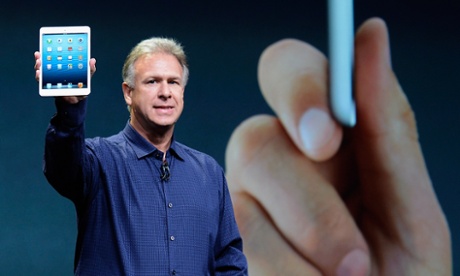
Apple senior vice president of worldwide product marketing Phil Schiller announces the new iPad Mini in San Jose.
Apple senior vice-president of worldwide product marketing Phil Schiller announces the new iPad Mini in San Jose, last week. Photograph: Kevork Djansezian/Getty Images

Apple will sell boatloads of the iPad mini, even though the just-announced tablet looks somewhat overpriced and under-powered. There are lots of reasons, but one in particular seems under-appreciated by competitors in the mobile device market: loyalty.

I'm not talking here about customer loyalty, a commodity that Apple commands more of than any other tech company, often to the point of customers becoming irrational in their ardor for all things Apple. Rather, this is about the company's loyalty to its customers.

The mobile hardware market has become a race to sell the latest and (sometimes) greatest gear. Part of this is a natural effect of the industry's high-velocity cycle of technology improvements, and its relative youth; the early days of any marketplace always see massive, frenetic change, and when you couple that with Moore's Law and its corollaries, you get relatively short-term obsolescence on an epic scale.

But another part of the rapid obsolescence we're seeing in this particular market has as much to do with corporate decisions as any technological innovation. The mobile industry – device makers and carriers – are gaming the system in distinctly customer-unfriendly ways. This is especially true in the Android ecosystem, where disloyalty to customers is a standard business practice – and, thereby, one of Apple's competitive advantages.

How standard a practice? I've now been orphaned twice by the Android crowd. The first time was an expensive Samsung tablet, sold by T-Mobile, that wasn't updated even though the same tablet did get updates for the wi-fi version and versions sold by other carriers. That experience made me view Samsung devices and T-Mobile's network as a last resort in my shopping.

The second time was just a couple of weeks ago, when Motorola – owned by Google, creator of the Android operating system – reneged on a public commitment to update my current phone model to the latest OS. The company has offered the customers it stiffed a $100 discount on a new phone. No thanks. Why would I trust Motorola in the future after this experience? I won't take the chance.

More broadly, I've lost faith in Google's promises regarding Android. The company has repeatedly promised to bring some order to the Android market, including a now-laughable vow some 18 months ago to get hardware makers to update the operating systems in a reasonable amount of time after the software is released. The reality is that most Android device makers and carriers are doing little or nothing to keep the operating systems up-to-date, visibly and insultingly inviting customers to upgrade the operating systems and other software by purchasing new hardware.

Imagine if Macs and Windows computers couldn't get the latest updates and operating systems and that you had to buy a new machine each time. This has more implications than stiffing customers on usability upgrades. It's actually dangerous when vital security fixes don't make it to devices.

The device makers and carriers have a generic excuse: it's complicated. This is true, but it's complicated because they've designed it to be so. Among other things, the Android manufacturers put ridiculous proprietary software layers on top of Android, gumming up the user experience and requiring more testing when updating the OS.

By comparison with the Android hardware makers, Apple is a paragon of treating buyers right. I won't move to iOS for other reasons – namely, Apple's refusal to allow customers to use their devices as they wish, and the much greater choice I get with Android – but one thing you can count on when it updates an OS is that it will work on recent devices, period.

Older Apple devices often won't get the full feature set of the newest software, to be sure. And sometimes Apple, too, seems to be "encouraging" customers to buy new phones and tablets. Still, the company's support for already-purchased devices is vastly better than almost all the Android crowd. (Apple's iPhone 5 hardware, with a new proprietary connector, requires customers to buy a $29 adapter and/or new peripheral hardware – a distinctly nasty move that the acolytes have, with their usual Apple-is-my-Daddy fervor, already forgiven.)

Google itself is branding the "Nexus" line of hardware, made by manufacturers like Asus (Nexus7 tablet) and Samsung (Galaxy Nexus phone), with a promise – hmm, where have we heard this before? – to keep those devices updated to the absolute latest operating systems and tweaks. You guessed it: the carriers have broken the promise anyway, and appear to be daring Google to do something about it. My Nexus 7-inch tablet, which works only with wi-fi, is getting updates directly from Google. When Apple rolls out an update, it works across iPhones and iPads no matter which carrier the customer has chosen. Why can't Google ensure this?

Microsoft's latest mobile OS, and the devices that will run it, seem likely to take a more Apple-like approach. But for customers, that will mean taking the bad – they control your device, not you – with the good.

For Android customers who are willing to take some time and a small risk of "bricking" their devices (though it's almost always possible to bring them back to life), there's a fix. They can upgrade themselves by loading software created by the Android hacking community for this purpose. The brilliant XDA Developers website is a treasure trove of helpful information and links to fixes. I'll be doing this soon with my Motorola phone.

I shouldn't have to do this: I shouldn't have to go to such lengths to avoid Google/Motorola's decision to make my phone – full of modern hardware – obsolete so fast. There are a few things the Android community – Google, in particular – should be learning from Apple, and that's one of them.

SOURCE : View The Original Article Here 

Agatha Christie's 120th anniversary marked with Poirot Google doodle


 It is 120 years since the queen of crime writers Agatha Christie was born and search engine Google is celebrating with a doodle on its home page depicting her fictional detective Hercule Poirot

Google doodle to mark Agatha Christie's 120th anniversary
Shedunit ... Agatha Christie 120th anniversary Google doodle. Photograph: Google

Google has marked the 120th anniversary of the birth of the queen of crime fiction Agatha Christie this morning with a doodle on its home page. The search engine's letter G has been transformed into the author's moustachioed detective, Hercule Poirot.

Christie is not the first author Google has honoured – the search engine has also created sketches on its home page for HG Wells and The Little Prince author Antoine de Saint-Exupéry – but she is undoubtedly the most prolific and bestselling. Born on 15 September 1890, the crime novelist is, with sales of over 2bn books worldwide, outsold only by Shakespeare and the Bible, her publisher, HarperCollins, says. Christie's 80 novels and short story collections have never been out of print since her death in 1976 – when all of London's West End theatres dimmed their lights for an hour to mark her passing – and still sell a million copies a year, according to HarperCollins.

The Google doodle shows Poirot – the only fictional character ever to receive a full-page obituary in the New York Times – and a cast of characters standing around a body (the search engine's letter "o", in this case wearing a set of pearls), as the Belgian detective undoubtedly explains exactly whodunit to his less perceptive observers.

Christie never set out to be a writer, but she rose to the challenge when her sister Madge dared her to write a detective story. Her path to publication wasn't easy: six publishers initially rejected The Mysterious Affair At Styles, and it took five years for the Bodley Head to get in touch and offer her a deal – for £25.

She moved to Collins for perhaps her most famous book, The Murder of Roger Ackroyd, in 1926, and stayed with the publisher from then on, publishing a "Christie for Christmas" every autumn from 1936 until her death 40 years later.

In 1976, William Collins recalled meeting Christie as a young author shortly after publication of the genre-twisting novel had made her famous, over 50 years earlier. "The blurb of her new detective novel gave away a vital clue, and my uncle sent me, young and innocent, to break the terrible news," he said. "I was received with the greatest kindness, but little did I think that this was the beginning of a long and very special personal friendship with one of the most wonderful and modest people I have ever met."

As well as the Google doodle, Christie's 120th anniversary is also being commemorated with Jane Asher's creation of a chocolate cake inspired by the Miss Marple tale, A Murder is Announced, and with "Christie Week" celebrations around Britain. HarperCollins, meanwhile, is marking the occasion with a new book deal to become the author's exclusive worldwide English language publisher, with plans to push her sales to "even greater heights" around the world.

 SOURCE : View The Original Article Here 


News Technology Google Google antitrust suit may have similar impact to Microsoft case in the 1990s

 US Federal Trade Commission initiative could see search giant facing proceedings on both sides of the Atlantic
 Google
Google is set to clash with the US government. Photograph: Lucy Nicholson/Reuters

The US Federal Trade Commission is preparing a case against Google that could lead to a full antitrust lawsuit similar to the action taken against Microsoft at the end of the 1990s, the Guardian has learned.

The initiative means Google could face antitrust proceedings on both sides of the Atlantic in its two biggest markets – potentially stopping its expansion into new areas of business.

The New York Times reported on Friday that the FTC is preparing a case with a draft memo running to more than 100 pages that looks at the question of whether Google manipulates its search results to favour its products, and whether it makes it more difficult for rivals' products to appear prominently in those results.

FTC sources confirmed to the Guardian that its staff are preparing the dossier, which could lead to a head-on clash between the US government and the search company. The agency has been investigating Google for more than a year, looking at the position it holds in the US search market, and how it is using that position in relation to its other products such as Google Shopping and Google Places.

That echoes the huge antitrust battle that occurred between Microsoft and the US department of justice in 1998, when the US software company was accused of using its Windows operating system monopoly to push its Internet Explorer browser to the disadvantage of rivals such as Netscape.

The European Commission is already negotiating with Google over similar accusations that the US company, which has a far bigger share of the search market in Europe than in the US, favours its own products such as YouTube over those of rivals when determining search results. Google's market share is 90% in Europe compared to about 65% in the US.

The competition commissioner, Joaquín Almunia, warned in September that if those negotiations fail, the commission could take Google to court over its antitrust concerns. The two sides have been negotiating through the summer.

Some unconfirmed reports say Google has offered to label its products when they appear in searches – but that solution does not satisfy companies which have complained to the commission about Google's practices.

Shivaun Raff, who runs the British vertical search engine Foundem, and was one of the original complainants to the commission, told the Guardian: "The harm being caused by Google's preferential placement is not only about consumer deception; it is primarily about the competition-crushing power of Google's ability to divert substantial volumes of traffic and revenues away from competing services and to its own. Because of this, clear and conspicuous labelling alone will not be sufficient to solve the problem."

There is no clear timetable for a settlement between Google and the commission.

Meanwhile, Google executives will be aware of the history of Microsoft's antitrust battles just over a decade ago. In the 1998 case, Microsoft was found guilty of abusing its monopoly in Windows, and was ordered to be broken up. It got the breakup ruling nullified on appeal, but had to submit to antitrust scrutiny under a regime that has only ended this year. The cultural impact on Microsoft, however, was colossal, causing it to second-guess its moves in a number of markets including search in the early 2000s. That created the opportunity for companies such as Google to grow rapidly.

Google told the NYT: "We are happy to answer any questions that regulators have about our business."

For an antitrust case to succeed, the US government would have to show that Google had an effective monopoly in one field – almost certainly search – and it was trying to use that monopoly to win market share in another field at the expense of rivals. Furthermore, it would have to show that consumers had been harmed by the second action.

If Google is found guilty of having a search monopoly and using it to expand into other markets, it could come under an antitrust oversight regime similar to which Microsoft had to work under over a decade ago. However, before the FTC can proceed with the case, a majority of its five commissioners would have to agree it has a case to answer.

In the case of Microsoft, the judge accepted the DOJ's arguments that Windows constituted a monopoly, that Microsoft was trying to build a monopoly with Internet Explorer, and that consumers were harmed by the narrowing of choice and the raising of the barriers to entry for web application developers.

In a case against Google, there is clear evidence that the company is seeking to break into new markets such as shopping and local information. But key questions for any FTC case would be proving that it has an effective monopoly in search, and that consumers have been harmed by its actions.

In the latter case, any case might turn on complaints from rival companies – even small ones – that complain they have seen their potential forestalled by Google's move into their fields allied to what they see as favourable placing of its own products above their own.

 SOURCE : View The Original Article Here 

Juan Gris celebrated in a Google doodle

Google has transformed its logo using cubist imagery to mark the 125th anniversary of surrealist artists' birth
Google doodle
Google doodle on the Spanish surrealist painter Juan Gris. Photograph: screengrab

The Spanish surrealist painter Juan Gris is the latest cultural figure to be honoured with a Google doodle.

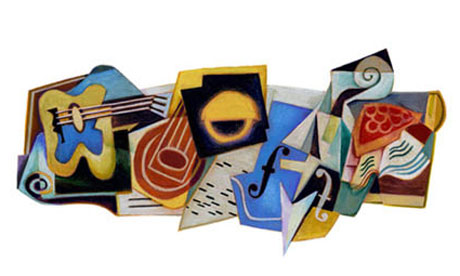
To mark the 125th anniversary of the artist's birth, the search engine has transformed its logo using cubist imagery he helped pioneer.

Gris was born José Victoriano Carmelo Carlos González-Pérez in Madrid on 23 March 1887. After studying art in Spain he moved to Paris in 1906 where he became a friend and contemporary of artists including Henri Matisse and Amodeo Modigliani.

By 1910 he had developed his his own cubist style. His work typically featured jagged and angular arrangements of objects or people painted using a palette of muted tones.

Google's doodle features stylised representations of musical instruments - familiar components of Gris's surrealistic vocabulary.

Gris, whose painting Violon et Guitare sold for $28.6m at auction in New York in 2010, was also acquainted with fellow Spaniard Picasso, whom he regarded as his mentor. His 1912 Portrait of Picasso is claimed to be the first cubist work not painted by Picasso or the French painter Georges Braque.

Gris died in 1927 aged 40 after suffering from chronic kidney failure.

 SOURCE : View The Original Article Here 


Mother's Day celebrated ... with a Google doodle

Colourful graphic sees the search engine's logo crudely redrawn as if by a young hand armed with a box of crayons

Mother's Day Google doodle
Mother's Day Google doodle.


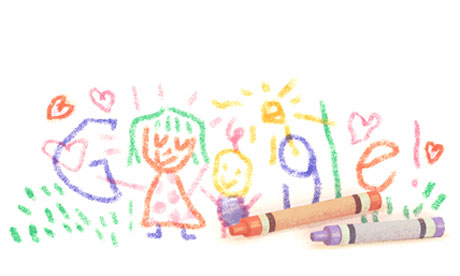
Google is celebrating Mother's Day with a doodle that pays homage to the childish scrawls that many doting parents will wake up to on Sunday.

The colourful graphic sees the search engine's logo crudely redrawn as if by a young hand armed with a box of crayons. The second and third letters of Google are transformed into a green-haired mother in a spotty dress beaming over her offspring. A squiggled yellow sun shines overhead, grass sprouts at their feet and love hearts fill the air. A pair of scattered crayons and an exclamation mark complete the image.

Mothering Sunday is a regular feature on Google's varied calendar of doodles, but this year, unlike in 2011, the website has distinguished between different dates used by different countries.

While the day is celebrated this year on 18 March in Britain, it falls on 13 May in America, Australia, New Zealand and numerous other countries.

Last year, Google marked Mother's Day in May with a doodle in the style of a store-bought rather than a homemade card. It featured the logo as if printed on embossed paper. The letter "l" of Google was replaced by a simple purple flower.

SOURCE : View The Original Article Here 

Monday, October 29, 2012

iPhone's 'Siri' directs Chinese to brothels: Media

 
 Apple's Senior Vice President of Worldwide product marketing Phil Schiller discusses the use of personal assistant Siri last year.

BEIJING - Concerns that the Chinese version of the Apple iPhone's new voice-activated assistant "Siri" directs users to brothels has been raised by netizens and lawyers, state media said Monday.

Users of the recently released Mandarin version of Siri were given several options for finding prostitutes upon request, but could not verify if the listings were accurate, the state-run China Daily said.

It cited a lawyer as saying the information supplied by Siri had "affected the public order and had a negative influence".

Prostitution is banned in China, which retains a largely conservative attitude to sex.

Nearly nine million users of Sina Weibo, China's version of Twitter, commented on the function, making it one of the hottest topics early Monday.

One suspected Apple of providing the service intentionally, while another noted how efficient it was at finding brothels, rather than restaurants that serve typically Chinese dishes.

"When I ask Siri about beef noodle soup or hotpot, she has no idea," the netizen said.

Another message said Siri's detailed knowledge of brothels puts Chinese law enforcement to shame.

"A mobile phone can know all this while the police do not?"

The service appeared to have been blocked by Monday, as Siri replied to variously worded attempts to find prostitutes with non-answers like: "There seems to have been a mistake" and "I didn't find anybody by that name".

China is the second-biggest market for Apple after the United States.

An Apple spokesperson could not be immediately reached for comment.

SOURCE : View The Original Article Here 

Google chief to meet with French president amid pay row


 This is as the internet giant wrangles with Paris over a bill that would force search engines to pay for content.

PARIS - Google's executive chairman Eric Schmidt will meet with French President Francois Hollande on Monday as the Internet giant wrangles with Paris over a bill that would force search engines to pay for content, a government source said.

Schmidt's meeting with the president will be preceded by one with Communication and Culture Minister Aurelie Filippetti, the source said on condition of anonymity.

Google has warned that it would exclude French media sites from its search results if France adopts a bill that will force search engines to pay for content.

A letter sent by Google to several French ministerial offices this month said it "cannot accept" such a move and the company "as a consequence would be required to no longer reference French sites," according to a copy obtained by AFP.

Google said a law which would require it to make payments to media sites for displaying links to their content, would "threaten (Google's) very existence".

Leading French newspaper publishers last month called on the government to adopt a law imposing a settlement in the long-running dispute with Google, forcing it and other search engines to share some of the advertising revenue from user searches for news contained on media websites.

Their demand follows the German government approving in August draft legislation that would force search engines to pay commissions to German media websites.

The culture minister Filippetti told a parliamentary commission last week that she was in favour of the idea, calling it "a tool that it seems important to me to develop".

She said she was surprised by the tone of Google's letter, telling AFP that "you don't deal with a democratically-elected government with threats."

SOURCE : View The Original Article Here 

Microsoft launches Surface tablet to tackle iPad

The surface tablet line includes a keyboard that doubles as a cover and will be powered by the new Windows 8 operating system.

LOS ANGELES, - Microsoft Corp introduced its own line of tablet computers on Monday at a much-hyped press event in Los Angeles, marking a major strategic shift for the software giant as it struggles to compete with Apple Inc and re-invent its aging Windows franchise.

The new tablet line, named Surface, includes a consumer device aimed directly at the Apple iPad, and another, larger machine designed to compete with lightweight laptops. Both include a keyboard that doubles as a cover, and both will be powered by versions of the new Windows 8 operating system.

The move breaks with Microsoft's operating model of the past 37 years, which has relied on computer manufacturers to make and market machines running Windows. It could throw the world's largest software company into direct competition with its closest hardware partners such as Samsung Electronics Co Ltd and Hewlett-Packard Co.

However, the success of Apple in recent years has underscored the benefits of an integrated approach to hardware and software, and Microsoft Chief Executive Steve Ballmer said on Monday that the company "didn't want to leave anything uncovered" as it rolled out Windows 8.

The new software is the biggest overhaul of Windows in years, and features a new touch-friendly interface dubbed"Metro". It is scheduled to be available for the Christmas shopping season.

The lighter, thinner version of the Surface tablet, built on an Nvidia Corp chip designed by ARM Holdings, will be the first to market at the same time as the general release of Windows 8, and will feature Microsoft's popular Office suite of applications.

It is comparable to Apple's new iPad, heavier but slightly thinner. It has a 10.6 inch screen and comes in 32GB and 64GB memory sizes.

A second, heavier tablet aimed at the new generation of lightweight laptops called "ultrabooks", running on traditional Intel Corp chips, will come in 64GB and 128GB models. That will be available about three months after the ARM version, Microsoft said.

The company gave no details on pricing, except that they would be competitive with comparable ARM tablets and Intel-powered Ultrabooks. They will be on sale online and in Microsoft's new brick-and-mortar stores in the United States.

Microsoft shares rose 0.8 per cent in after-hours trading, making up for a 0.6 per cent drop to $29.84 in the regular Nasdaq session.

Industry watchers were generally impressed by the devices'specifications, but doubted they were a sure-fire hit.

"I don't see this as an iPad killer, but it has a lot of potential," said Sarah Rotman Epps, an analyst at tech research firm Forrester. "This raises more questions than answers. The story that Microsoft told today was incomplete. They focused on the hardware innovation but didn't talk about the services, the unique Microsoft assets that could make this product amazing."

Contrary to expectations, Microsoft made no mention of integrating content and features from its top-selling Xbox game console, the Skype video calling service it bought last year, or Barnes & Noble's Nook e-reader, its new partner in the electronic books market.

FOLLOWING APPLE

Sales of tablets are expected to triple in the next two years, topping 180 million a year in 2013, easily outpacing growth in traditional PCs. Apple has sold 67 million iPads in two years since launch.

Apple, which makes both hardware and software for greater control over the performance of the final product, has revolutionized mobile markets with its smooth, seamless phones and tablets. Rival Google Inc may experiment with a similar approach after buying phone maker Motorola Mobility this year.

Making its own hardware for such an important product is a departure for Microsoft, which based its success on licensing its software to other manufacturers, stressing the importance of"partners" and the Windows "ecosystem."

"The question is why is Microsoft doing it?," said Michael Silver, an analyst at tech research firm Gartner. "Lack of faith in the OEMs (computer makers)? There's definite risk here as Microsoft increasingly competes with its customers."

Microsoft stressed that "OEMs will have cost and feature parity on Windows 8 and Windows RT," meaning that it would not hold back any features from other hardware makers' Windows tablets.

When it has ventured into hardware, the Redmond, Washington-based company has had a mixed record.

Apart from keyboards and mice, the Xbox game console was its first foray into major manufacturing. That is now a successful business, but only after billions of dollars of investment and overcoming problems with high rates of faulty units - a problem which was nicknamed the "red ring of death" by gamers.

The company's Microsoft-branded Zune music player, a late rival to Apple's iPod, was not a success and its unpopular Kin phone was taken off the market shortly after introduction.

The company killed off a two-screen, slate-style prototype of a tablet device called Courier later that year, saying the technology might emerge in another form later on.

SOURCE : View The Original Article Here 

Microsoft demurs at Motorola patent settlement offer

 SEATTLE - Microsoft Corp has brushed off an offer by Motorola, the phone maker bought by Google Inc, to settle patent disputes with Motorola that are threatening to halt imports of Android devices and Xbox game consoles into the United States.

The patents at issue relate to Microsoft technology called ActiveSync, which updates calendars automatically on some Android phones.

Microsoft is demanding royalties from all companies using Google's Android system in their devices, and has settled with most major manufacturers except Motorola.

is demanding royalties on some of its own video and wireless technology used in Microsoft's Xbox game console and the Windows operating system.

"While we welcome any good faith settlement effort, it's hard to apply that label to a demand that Microsoft pay royalties to Google far in excess of market rates, that refuses to license all the Microsoft patents infringed by Motorola, and that is promptly leaked to the press," said Horacio Gutierrez, Microsoft's deputy general counsel, in an e-mailed statement.

According to Microsoft, Motorola has offered to pay Microsoft 33 cents for each Android phone using ActiveSync, and asked for a royalty of 2.25 per cent on each Xbox and 50 cents per copy of Windows for using its patents.

Last month the International Trade Commission recommended an import ban on infringing Android devices and Xbox consoles unless the patent issues were settled.

Representatives of Motorola and Google did not immediately respond to requests for comment.

SOURCE : View The Original Article Here 

Microsoft unites phone, PC software


The world's largest software company, which is running to keep up with Apple's iPhone and Google's Android devices, said the common core means customers will have a greater choice of phones and applications, and be able to switch between multiple machines more easily.

The move follows the launch of the Surface tablet on Monday, Microsoft's effort to join the fast-growing mobile-computing market and to tackle Apple's iPad head-on.

At an event in San Francisco on Wednesday, Microsoft officially announced its new phone software, called Windows Phone 8, and said phones running on the software would hit the market this autumn.

The new phones - made by handset makers Nokia, Samsung Electronics, HTC and Huawei on Qualcomm dual-core chips - will feature voice commands, Skype calling, near-field communication (NFC) for wireless transactions, and built-in maps for Global Positioning System directions.

Microsoft's voice-recognition feature goes beyond Apple's rival service, Siri, by allowing users to issue commands to apps, not just the phone's core operating system.

The new software will support NFC transactions - in which the user taps a reader to make a purchase - but Microsoft is leaving it to independent software makers to write the actual applications controlling the process, meaning that it will not be a direct competitor to the Google Wallet service for Android phones.

Microsoft's new phones will have an updated, customisable start screen in Microsoft's new Metro style, which centres on touchable "tiles", or colourful squares. They represent people, applications and services which are updated in real time - for example, showing Facebook posts or new e-mail.

The Metro style is also the interface for Microsoft's Windows 8 operating system - designed to run on both tablets and traditional PCs - which Microsoft is expected to launch around October.

Microsoft's Windows phones have been well-reviewed, but have not caught on in the market, partly due to the fact that there are only 100,000 or so apps available, compared to around 500,000 for both Apple and Android devices.

Microsoft is hoping that a common core between its PC and phone software will make it easier for developers to create apps for both, with minimal adjustments.

The company said current devices, which run on Windows Phone 7.5, will not be able to update to Windows Phone 8. Windows Phone 7.5 users will be offered an update that includes the new software's start screen but excludes other features.

That could dampen sales of Windows Phone 7.5 devices for the next few months, until the new crop of phones appears in stores.

Microsoft has invested billions of dollars in phones - including a deal with Nokia to use its software - in an attempt to break into the market.

So far, it has had little impact, capturing only 2 per cent of the world's smartphone market last quarter, according to tech-research firm Gartner.

Google's Android leads the market with 56 per cent, followed by Apple with 23 per cent.

SOURCE : View The Original Article Here 

Analysts eye HTC's 5-inch-screen phones


The stock price of HTC yesterday rose after the opening of the market. At the end of trading, however, HTC's stock price returned the previous day's level.

HTC plans to launch its HTC J Butterfly in Japan and HTC One DLX in North America by the end of this year.

Currently, there are few smart phones with five-inch screens in Japan, analysts said.

Only Samsung and Sharp have smart phones with five-inch screens in Japan, and the HTC J Butterfly is the first smart phone with a 1080p mode screen, according to analysts.

HTC J Butterfly uses Super LCD 3 technology for its screen. The highest resolution is 440 ppi. The cellphone is equipped with a 1.5 GHz quad-core processor.

The HTC One DLX is expected to be launched in North America in the middle of November. The cellphone is the first phone with a five-inch screen in the One series. The HTC One DLX screen also uses a 1080p mode, and the phone also uses a quad-core processor.

Analysts said these upcoming HTC smart phones can be considered high-end products.

SOURCE : View The Original Article Here 

Apple marks anniversary of Steve Jobs death


"Steve's passing one year ago was a sad and difficult time for all of us," Jobs's successor as chief executive, Tim Cook, said in a message on the company website.

"I hope that today everyone will reflect on his extraordinary life and the many ways he made the world a better place."

Apple posted a two-minute video with snippets of Jobs and the various products he introduced, from the early Apple computers to the iPhone.

Jobs died October 5, 2011 at the age of 56 after a long battle with cancer.

"One of the greatest gifts Steve gave to the world was Apple," Cook said.

"No company has ever inspired such creativity or set such high standards for itself. Our values originated from Steve and his spirit will forever be the foundation of Apple. We share the great privilege and responsibility of carrying his legacy into the future."

Cook added: "I'm incredibly proud of the work we are doing, delivering products that our customers love and dreaming up new ones that will delight them down the road. It's a wonderful tribute to Steve's memory and everything he stood for."

Jobs was just 21 when he founded Apple Computer in 1976 with his 26-year-old friend Steve Wozniak in his family garage.

From such humble beginnings the company grew into the world's most valuable firm, with a market value of some $625 billion.

Jobs led the drive for Apple to produce the iPod, iPhone and iPad, and created iTunes, which became one of the world's biggest e-commerce platforms and a leader vendor of music, apps and other content.

Under Jobs, Apple introduced its first computers and then the Macintosh, which became wildly popular in the 1980s. But he left Apple in 1985 after an internal power struggle and started NeXT Computer company, aimed at businesses.

He then co-founded Pixar animated studios in 1986 from a former computer graphics unit he bought from movie industry titan George Lucas. The studio produced acclaimed films like "Toy Story."

Jobs reconciled with Apple in 1996 with the company buying NeXT for $429 million and Jobs ascending once again to the Apple throne.

Jobs revamped the Macintosh line, launching a "post-PC era" in which personal computers give way to smart mobile gadgets.

SOURCE : View The Original Article Here

Apple 'likely to unveil iPad mini on Oct 23'


The event would come before Microsoft unveils its latest operating system, Windows 8, and its new Surface tablet on Oct 26.

An Apple spokesman did not immediately respond for comment.

Speculation has been swirling for months that Apple was planning a smaller, less expensive version of its popular iPad to take on cheaper competing devices.

SOURCE : View The Original Article Here


Apple Korea chief gets pink slip by email

Dominique Oh, the head of Apple Korea, stepped down last week, a move staged against his will, according to multiple industry executives Tuesday.

"He was told to leave his position as general manager through an e-mail," said a top industry executive. "The news was a shocker. I don't know who will want the job after this."

Oh's ouster came as a surprise as the Cupertino-based IT behemoth is currently looking forward to releasing its latest iPhone 5 here in early November.

It has also been less than two years since Oh was seated to spearhead the Korean unit following his predecessor Andrew Sedgwick, who headed Apple Korea for over a decade.

Oh, a former LG Electronics executive, was appointed in May of last year.

The lackluster sales of Apple's iPhone 4S is most likely to have impacted the decision to get rid of Oh, said industry sources.

"We were notified that the profit from Korea's iPhone 4S sales was the lowest among its offices in the Asia-Pacific region," said another industry executive who wished to remain anonymous. "On the other hand, Japan recorded the highest profit in proportion to its population and number of smartphone users."

Sources also say that the global patent battle between Apple and Samsung Electronics may have contributed to Apple's decision.

Oh is a telecom veteran who has served diverse posts at LG, including European operation chief and vice president of global product planning and smartphones.

Regarding his appointment, industry watchers had said Apple was seeking to strengthen its foothold in Korea, which is the home turf of its toughest rivals, such as Samsung and LG.


SOURCE : View THe Original Article Here

Microsoft-Apple redux: the empire strikes back

WASHINGTON - It used to be that Microsoft was the evil empire, and Apple the scrappy underdog.

Now the roles are reversed, and Microsoft is challenging a dominant Apple, which has staked its claim as the leader of the sizzling mobile sector for tablets and smartphones, as well as the biggest seller of digital music.

Microsoft, still the biggest force in the PC market with its Windows operating system, is making a new, belated effort on Apple's turf.

The Redmond, Washington-based giant has launched its own branded Surface tablet with prices and specifications similar to those of the iPad, and a new Windows 8 operating system designed for tablets.

Microsoft also is making an aggressive push in mobile phones with its Windows Phone 8 platform being used by Nokia, Samsung, HTC and others.

And it has created its own music service as an alternative to Apple's iTunes, with 30 million songs and additional features offered by Internet radio operators.

"Microsoft is the challenger now, and it is taking a lot of pages from Apple's playbook," said Roger Kay, an analyst and consultant with Endpoint Technologies Associates.

Kay said Microsoft is learning from Apple about the advantages of "having control of the integrated stack," meaning software and hardware, along with other services to keep users within the company's ecosystem.

But he said Microsoft has "constraints" because its updates must remain compatible with older devices, making the task more complex.

"Microsoft can write software which is as good as Apple's but it has to be free of the constraints," Kay said.

"Apple can and has said to customers, 'Throw out all your old devices, because we have new ones.' Microsoft has been at a disadvantage."

He said Microsoft has the potential for a fresh start with the new tablet, which integrates hardware and software called Windows RT in a new product.

But the tech landscape is far different than in previous Microsoft-Apple clashes. Amazon claims some 22 per cent of the tablet market, and Google and its partners using the Android system are a major force in mobile.

But Microsoft appears to be digging in for the long-haul by getting into tablets, the mobile market and music.

Kash Rangan, analyst at Bank of America/Merrill Lynch, said Microsoft appropriately priced the new tablet starting at $499, the same as the entry-level iPad. This will avoid "cannibalization" of products which impact the Windows franchise.

And because Microsoft will include its Office software in the tablets, they "appear less pricey to users relative to iPads," said the analyst, who expects about 5.2 million of the Microsoft devices to be sold over the coming year.

In music, Microsoft is making a new offensive with its Xbox music service more than a year after it pulled the plug on its Zune digital media player, a would-be rival to Apple's iPod.

However some analysts said the new service might fare better.

"The service takes aim at a fractured digital music landscape (where) consumers have to use multiple services such as iTunes, Pandora and Spotify today and do not have one simple destination that allows them to do everything," said Richard Greenfield at BTIG Research.

With the various initiatives, Microsoft is seeking to build an "ecosystem" like Apple, which can deliver the devices and services to remain connected to consumers.

"People are looking to buy a complete package, that's what they buy when they go to Apple," said Jack Gold, analyst with J. Gold Associates.

Frank Gillett at Forrester Research said that while Microsoft is used on some 95 per cent of PCs, its share of all "personal devices" - which include PCs, smartphones, and tablets - is only around 30 per cent.

The new initiatives "will simply stop the shrinking, maintaining Microsoft's share at about 30 per cent," he said.

"By 2016, we believe that Microsoft will have about 27 per cent of tablet unit sales, but only about 14 per cent of smartphone sales - and some of us are very sceptical they'll even get to 14 per cent."

Gold said while Microsoft may not be able to dominate in tablets or phones, its strategy appears to "kickstart" the market to keep the Windows platform relevant.

SOURCE : View The Original Article Here

Apple posts 'mini' notice admitting Samsung didn't copy design


Apple Inc. on Friday posted a notice on its UK website admitting that Samsung's tablets do not infringe on its iPad design, but tucked it away in a hard-to-find place.

To uphold a UK court's ruling to post the notice, Apple inserted a line saying "Samsung/Apple UK judgment" at the very bottom of the website, next to "Terms of Use" and "Private Policy." When users click onto it, it opens a page outlining the ruling that sided with Samsung.

"On 9th July 2012, the High Court of Justice of England and Wales ruled that Samsung Electronics Limited's Galaxy tablet computer, namely the Galaxy Tab 10.1, Tab 8.9 and Tab 7.7 do not infringe Apple's registered design," it said.

However, the Cupertino-based firm added that the judge made "several important points comparing the designs of the Apple and Samsung products," elaborating that the Korean company's gadgets were "not as cool."

Apple also mentioned other court cases such as the one in its home turf where it said the US jury found Samsung "guilty" of patent infringement: "So while the UK court did not find Samsung guilty of infringement, other courts have recognized in the course of creating its Galaxy tablet, Samsung willfully copied Apple's far more popular iPad."

Similar statements are expected to be printed in five different media outlets today, such as the Financial Times, the Daily Mail, Guardian Mobile magazine and T3.

SOURCE : View The Original Link Here

Saturday, October 27, 2012

Microsoft Announces New Streaming Service, Xbox Music


Xbox MusicIt's about high time for a reboot of Microsoft's music service, and it's coming soon under the moniker Xbox Music.

Microsoft announced its Xbox Music streaming service today, which will go live tomorrow on Xbox 360 and will be featured as part of Windows 8, as well as Windows Phone 8. Xbox Music, which also streams music videos, will supposedly not be supported on Windows 7 or Windows Phone 7, though those users will still be able to use Zune Music and will have access to all of the songs in the Xbox Music catalog for download.

The service, which is similar to Pandora and Spotify in nature, will have unlimited free streaming on Windows 8 for the first six months when the OS is released on October 26. After that, the free streaming becomes time limited (10 hours per month), but users can also buy an Xbox Music Pass for $9.99 per month or $99 per year for Xbox Live Gold subscribers. With the pass, users will not only be able to enjoy unlimited streaming, but also ad-free music and the ability to store tracks for offline listening.

The new Xbox Music content will supplement the existing content on Microsoft's platforms, adding 30 million global songs (18 million in the US) to the company's media catalog. Those interested in trying out the service can do so on the Xbox 360 tomorrow via a 30-day free trial.

SOURCE : View The Original Article Here

Friday, October 26, 2012

Microsoft Surface RT Tablet Launches Today


Microsoft's highly-anticipated Surface RT tablet is available in stores starting today, which includes the pop-up stores that the company set up across the nation in anticipation of the tablet's launch.

Those who were seeking to avoid the lines that are undoubtedly piling up at most retail stores and preordered the Surface RT will receive their tablet today.

The 32 GB model has a starting price of $500. Adding a Touch Cover (similar to Apple's Smart Cover, but with a touch-sensitive keyboard) runs customers an extra $100. For $700, customers can get the 64 GB model of the Surface RT as well as a Touch Cover.

More about this Tablet

As the name implies, the Surface RT runs Windows RT, rather than a pure version of Windows 8. While this variation on Windows 8 is built to support ARM-based chips and provide better battery life, it does have certain shortcomings, such as the inability to any apps other than those found in the Windows Store. Similarly, its version of Office 2013 is a "preview" version with certain limitations, with a full version coming later.
SOURCE  : View The Original Article Here

Samsung Galaxy S III Sales Break 10 Million


Samsung Galaxy S IIIMaybe Samsung is right and the next big thing really is here: sales of the company's Galaxy S III smartphone have officially broken 10 million units.

Though he was unable to provide specific numbers, the head of Samsung's information technology and mobile communication division, Shin Jong-Kyun, told the Yonhap News Agency that the company has moved more than 10 million Galaxy S III units since its initial launch in the EU and Middle East at the very end of May.

This outstrips the pace of its predecessor, the Galaxy S II, which took five months to reach 10 million units in sales. And the company's executives are likely satisfied with the news, as Samsung previously stated that, despite fighting component shortages, its goal was to hit the 10 million mark by early July.

Sales in the United States have surely contributed to this figure, as Samsung's new flagship phone is available from all of the top carriers in this country.

To learn more about the Samsung Galaxy S III, have a look here at our review of the US version, or here for our review of the international version.

SOURCE : View The Original Article Here

Thursday, October 25, 2012

Chrome-Android-convergence

Chrome-Android-convergence
It was a bit of a surprise that Chrome didn’t make an appearance on Android sooner. Google released a version of its high speed browser for Android earlier in the year and it came out of beta at the end of June. It was an optional extra in Android 4.0 Ice Cream Sandwich, but with the release of Android 4.1 Jelly Bean, Chrome became the default browser. The first device to ship with Chrome pre-installed was the Nexus 7.

Yesterday we learned that Motorola’s new Razr family, the Motorola Droid Razr HD, the Motorola Droid Razr Maxx HD, and the Motorola Droid Razr M would ship with Chrome pre-installed. That makes them the first devices running Android 4.0 Ice Cream Sandwich to have Chrome as the default browser, although the Motorola CEO, Dennis Woodside, was quick to point out that they would all be running Jelly Bean by the end of the year.

Chrome is one of the fastest browsers around and it’s certainly one of the best Android browsers, if not the best. The tie in with your desktop Chrome for sharing bookmarks and the ability to sync tabs is awesome. The focus with Chrome is on speed and it has a slick, streamlined interface. As great as the browser is, there are two obvious problems for Android fans.

Firstly, you need to be running Android 4 or above to use Chrome, so right now that’s about 22 percent of Android device owners. Secondly, Chrome for Android doesn’t support Flash which can be annoying at times and prompts many people to use a different browser.

What do you think? Do you want Chrome as the default Android browser?

SOURCE : View The Original Article Here

Google’s Chrome browser doesn’t work on the new Motorola RAZR i


Motorola, who is owned by Google, announced a new smartphone yesterday called the RAZR i. It’s basically the RAZR M that’s currently available on Verizon Wireless in the United States, but with an Intel chip inside. We know it’s supposed to be fast and all that jazz, but at what cost? How’s the battery life? Will apps in the Google Play Store run seamlessly despite the different architecture? We’re going to find all that out when we get a chance to review the phone, but we’re already getting some hints that all is not well in the land of Intel. Our friends at Android Central recently tried installing Google’s Chrome browser on the RAZR i, and guess what, it doesn’t work. Ignoring the fact that this “Google Phone” doesn’t run the latest version of Android for a second, now we have to deal with it not even running Google’s own software!

What does Google have to say about all this? They haven’t issued a statement yet, but Motorola has, and it says: “There is not a version available that is optimised for Intel. We expect it at in-store launch or shortly thereafter.”

This brings up an important question: Are you ready to be Google’s guinea pig for this whole Android on Intel project? You’ll get a fast phone, there’s no doubt about it, but is it worth the incompatibilities and other potential issues? Looking at the top five smartphone vendors as of Q2 2012, the only one on that list making an Intel phone is ZTE. Their Intel device, the Grand X IN, is supposed to land on store shelves this month, so technically it’s not even shipping. If the world’s five biggest smartphone makers aren’t supporting Intel’s attempt to enter the smartphone market, should you?

SOURCE : View The Original Article Here

Apple posts record $8.2 billion in profits on millions of iOS device sales, but falls short of estimates


Stop me if you’ve heard any of this before: a tech giant failed to meet Wall Street expectations for the third quarter of the year, while bringing in huge profits nonetheless.

We all saw Google’s leaked Q3 2012 results that sent the stock into a downward spiral until trading was stopped. Microsoft’s own numbers fell short of what analysts expected. Now it’s time for Apple to take the same path with its results for Q4 FY2012 (the period ending on September 30 represents the company’s fourth fiscal quarter).

So how did Apple do? Better than Google and Microsoft combined, reporting $8.2 billion in net profits or $8.67 per share (EPS) on $36 billion of revenue. The company is on an ascending path, when looking at the year ago quarter, when it posted $6.6 billion in profits ($7.05 EPS) on $28.3 billion, but it still fell marginally short of analysts expectations: $8.81 EPS on $35.8 billion of revenue. Apple stock dropped over 1% on the news.

Overall, Apple shipped 26.9 million iPhones – a number higher compared to Q4 FY2011 and most likely boosted by strong iPhone 5 sales in the last days of its Q4 – and 14 million iPads, a number that’s seen as “well below lowered forecasts for the tablet,” despite being higher during the same period last year.

Forecast for the crucial December quarter is at $52 billion in revenue – “below the average estimate of $55 billion, according to Thomson Reuters I/B/E/S,” but we’ll note that Apple sits on a $121.3 billion pile of cash, and that in just three quarters it has already passed its entire 2011 performance when it comes to revenue and profits.

Why is any of this important for the Android ecosystem and the mobile market? Well a company with that much money on hand, that sells at least two mobile products that are still in hot demand with consumers and that is able to report higher earning year-over-year quarters is still a fierce rival for anyone else in the mobile business, especially Google and Microsoft, who are yet to reap similar profits from their mobile divisions.

The Christmas quarter will definitely be interesting to watch, with a variety of new mobile devices already available, or about to hit stores from all major players.

What smartphone and/or tablet are you buying this holiday season?

SOURCE : View The Original Article Here

Samsung under investigation regarding use of FRAND patents against Apple


It seems that it’s impossible to go a week without something washing up in the wake of Apple vs Samsung. This time, the United States Department of Justice is investigating Samsung for possible abuse of its standard-essential (or FRAND) patents.

The Statement

A statement filed  by Apple with the International Trade Commission, filed yesterday and entered into the public record today, states that “the Department of Justice has opened an investigation into the manner in which Samsung has used–or misused–its declared-essential patents.”
If this sounds especially familiar, it could be due to the story that we ran last week about Google considering a settlement in the antitrust case that the FTC been building against them. In that case, Google claimed that many of its competitors, including Apple, had acted the same way: pursuing litigation right away without trying to licence their patents first. With Apple and Samsung at each other’s throats, it’s easy to see why Apple would claim this, but the question at hand is whether there is anything to back it up.

Florian Mueller of FOSS Patents says “I have no doubt that Apple’s representation is accurate because Apple would otherwise risk major problems with the ITC and the DoJ.”  He mentions a Bloomberg article from June 30 where an unidentified source states that “U.S. antitrust regulators have agreed the FTC will focus on Motorola Mobility and the Justice Department will scrutinize Samsung Electronics Co.’s handling of industry-standard patent claims.”
There is no doubt that Apple is trying to get government authorities to investigate Samsung. This most recent incident and the investigation Apple got opened into Samsung in Korea show that the Cupertino company is doing everything in its power to get governments to do a large portion of the work against Samsung that they might have to do themselves otherwise.

Samsung Fires Back

Samsung, of course, is not taking this action laying down. The company filed a public interest statement yesterday, stating that it made a FRAND offer and that its 2.4 percent royalty demand is fair. While this may not seem like much, University of Iowa College of Law Professor Herbert J. Hovenkamp wrote in a paper earlier this month that “Permitting the owner of a FRAND-encumbered patent to have an injunction against someone willing to pay FRAND royalties is tantamount to making the patent holder the dictator of the royalties.”
Do you think that either Samsung or Apple are in the right here? Are they both just companies that, like so many these days, seem to have gone crazy for patents?

SOURCE :  View The Original Article Here

smackdown: Apple teams up with Microsoft to bid against Google and Android OEMs for Kodak’s patents


Wednesday, October 24, 2012

Motorola Reveals The List Of Smartphones Upgradable To Android 4.1 Jelly Bean


Motorola Android 4.1 Jelly Bean Update
Motorola has officially revealed the list of terminals that will receive the Android 4.1 Jelly Bean update, as well as the models that will be ignored. The US-based manufacturer has launched an official webpage that guides the users through the Android 4.1 Jelly Bean update process. You can find the webpage here.

But what’s even more interesting is that Motorola has prepared a special upgrade plan for the users whose devices do not qualify for the Android 4.1 Jelly Bean update. Therefore if you own a Motorola device that is not in the list of devices ready for Android 4.1, you will receive $100 in credit you can use to purchase a new Moto smartphone.

The Motorola models that will NOT receive Android 4.1 Jelly Bean are Droid 3, Droid X2, Atrix 4G, Atrix 2, Admiral, Cliq 2, Milestone 3, Milestone X2, Electrify, Photon 4G, XPRT, Titanium, and Triumph.

So if one of the smartphone in the list above is also in your pocket, will be able to receive a $100 rebate when you purchase and trade up to selected Jelly Bean upgradeable devices. As far as I know, the $100 rebate upgrade offer is only available on the US market.

On the other hand, there are six Motorola smartphones that will be updated to Android 4.1 Jelly Bean soon. If you own an Atrix HD, RAZR M, RAZR HD, RAZR Maxx HD, Electrify, or Photon Q you are among the lucky users that will be able to upgrade to the latest firmware of Google’s mobile operating system.

Are you ready to trade in your old Moto for a new one? Please let us know what you decided in the comments section below.

SOURCE: View The Original Article Here

KDDI Japan Galaxy S3 LTE Release Date, Specs and Price Announced

The Japan customers who are looking forward in getting a new high end smartphone are in luck as the KDDI carrier had just announced that the Samsung Galaxy S3 LTE will be made available soon. Of course the device will not be released on the mentioned name, as the Japan version of the S3 LTE will be dubbed as Galaxy S3 Progre. Furthermore, there are some changes if we take a look over the specs list, so for learning more about the KDDI S3 Progre launch date, specs and future price tag, read the following lines.

In fact the Galaxy Progre will be a carrier-based variant of the SGS3 LTE offering a 1.5 GHz dual-core Snapdragon processor (similar with the US version), along with the 4.8 inch HD Super AMOLED display, 2 GB of RAM memory, 32 GB of internal storage which can be expandable thanks to the memory slot card, an 8 MP camera on the back and a 2.1 MP camera on the front.

The rest of the features are the same with the global variant of the Galaxy S3; in Japan the Progre will be available in two colors, Omega Blue and Marble White. Well, what do you think, are you interested in getting the one of the most popular handsets nowadays, or you rather wait a little bit more until new smartphones are being revealed?

Anyway, you should know that the KDDI Japan Galaxy S3 LTE release date is November 2nd, so you should start saving money guys. The price tag for the S3 Progre will be around 30000 yen, or less depending on the commitment you decide to sign with the carrier.

Now, we do know that the OTA Jelly Bean update will soon arrive for the US SGS3, so I’m guessing that there won’t be long until we will see the same offered for the Japan customers, meaning that the OS “issue” will soon be resolved. However, with or without the OS improvement, we have to admit that this is one of the best smartphones ever manufactured.

SOURCE: View The Original Article Here

LG Nexus 4 Release Date Confirmed For October 29th


LG Nexus 4 Release Date
LG Nexus 4 is the next smartphone launched under the Google badge and it promises high-end hardware configuration and the latest version of the Android operating system. Amit Gujral, head, of LG Mobile Product Planning, confirmed for IBN Live India that “Google will unveil the LG Nexus on October 29.”

Everybody is talking about the LG Nexus 4 lately and a Belorussian blog even got to review a prototype ahead of the official launch event.

I terms of design, LG Nexus 4 is a reminiscent of the Galaxy Nexus, the Samsung model it will soon replace: it has no physical buttons on the front panel and even shares its notification LED located at bottom end of the terminal. The main difference is the back lid. Nexus 4 has a shiny plastic back, textured with numerous dots that are there to hide the fingerprints. The smartphone now has a unibody design, therefore you will no longer have access to the battery.

LG Nexus 4 will be the first Google Nexus phone that ditches the AMOLED technology over an IPS display that will reportedly bring more realistic colors. According to the guys that got their hands on the device, it comes with a 4.7-inch display with a resolution of 720 x 1,280 pixels with great contrast and brightness, very close to what the iPhone 5 (its main rival) offers.

The hardware platform is based on a Qualcomm Snapdragon S4 Pro chipset with a quad-core Krait CPU at 1.5 GHz and Adreno 320 GPU, plus not less than 2 GB of RAM.

Even though the prototype tested by our source has 8 GB of internal storage, it seems that the model that will go on sale will have 16 GB of memory, but no miroSD card slot. LG Nexus 4 also comes with an 8 megapixel camera.

Despite its promising technical specifications, LG Nexus 4 didn’t impress in benchmarks, as it was outscored by HTC One X or Galaxy Note 2. There might be an explanation for this: the model tested by the guys at Onliner is a prototype.

The LG Nexus 4 prototype is running on Android 4.1.2 Jelly Bean and even though this is the latest firmware available for the users, the final version of the smartphone will come pre-loaded with Android 4.2, which will be unveiled by Google at the event scheduled for October 29th.

LG is the manufacturer of the Nexus 4 and this might look as a surprising option for Google, as, until now, the Mountain View-based giant co-developed its devices with the biggest players of the market at that time like HTC (for Nexus One), Samsung (for Nexus S and Galaxy Nexus), or ASUS (see Nexus 7). This strategical change might suggest that Google will not limit itself to teaming up with just one company, therefore we might see other Nexus smartphones in the months to come.

Least, but not last, the name chosen by Google and LG for the new smartphone generated confusion. Unlike the Nexus 7 tablet, LG Nexus 4 is not about its display size. As you probably know LG Nexus 4 will be the fourth Nexus device, succeeding HTC Nexus One (January 2010), Samsung Nexus S (December 2010) and Samsung Galaxy Nexus (November 2011).

Summing up, we will definitely see the LG Nexus 4 on October 29th at the event hosted by Google where the search engine giant will also unveil Andorid 4.2

SOURCE: View The Original Article Here

Canada Sony Xperia T Release Date Officially Revealed


James Bond’s very own smartphone in Skyfall is about to become available for the common “agents” from Canada, as Sony has just revealed the first aspects regarding to the Xperia T release date through Bell, Mobilicity, MTS, Rogers and Videotron.

Since its first appearance in August, the Xperia T surprised us all with its high end specs and with the impressive design, not to mention the Bond commercial which is the perfect market strategy planned by Sony lately. Anyway, if you live in Canada and want to buy this 007 personalized device, then you should start saving money, as next month the Xperia T should make its debut.

As already stated, Sony announced that the handset will be offered by Bell, Mobilicity, MTS, Rogers and Videotron starting from “this November”. Unfortunately there are no words about a future availability through Telus, which is one of the most important retail in Canada. But, who knows, maybe further news will be made available in the coming days.

Now, for those who don’t know, the Xperia T specs are including a large 4.6 inch Reality Display (powered by the Mobile BRAVIA Engine 2) touchscreen, a 1.5 GHz dual core Snapdragon S4 processor, a 13 MP camera on the back along with an 1.3 MP one on the front, NFC, 16 GB of internal storage memory and an 1850 mAh battery. Unfortunately, the phone will be released with the Ice Cream Sandwich OS instead of Jelly Bean, but Sony already announced a “soon after” OTA update.

Now, according to our sources, the Xperia T will come with 007 ringtones, themes and background images along with many other dedicated features. Furthermore, as the phone will be made available through numerous carriers, there will be an LTE and HSPA + variant of the same. In Canada, Bell, Rogers and MTS will release the LTE Xperia T, while Mobilicity and Videotron will offer the HSPA+ variant.

There are no words regarding to the future pricing offers, but since the launch date is next month, we should find out more in the coming days, or weeks. Stay close and do share your impressions related to this new Android based smartphone with us and with other users by using the comments area from below.

SOURCE: View The Original Article Here

AT&T HTC One X Root For 2.20 Firmware Is Up And Running


root att htc one x on 2.20
We are aware that many of the HTC One X users that purchased the smartphone from AT&T were desperate for a root solution, as the latest firmware version (build 2.20) was causing some serious problems for the hackers.

When 2.20 firmware update for AT&T HTC One X was released it brought the usual bug fixes, but the software engineers working for the biggest carrier in US also thought that it would be “nice” to patch up root exploits, locking the bootloader so tight that no one was able to find a way to bypass the S-ON protection. Djrbliss found a way to root AT&T HTC One X on 2.20 firmware and he was kind enough to post the solution on XDA Developers Forum.

The main challenge was to find an exploit that allows the users to write to /system partition, as the S-On for 2.20 firmware brought an annoying lock for the NAND partition. Our hero has found an exploit that now allows you to have a “permanent root” on your AT&T HTC One X running on 2.20 firmware, but you won’t be able to perform it without unlocking the bootloader.

As you probably know, a procedure like unlocking the bootloader of your device violates AT&T’s terms and conditions, therefore the warranty of your device will be voided. Even so, if you know what you’re doing it’s a small price to pay given the opportunities and the customization options the root solutions brings with it.

HTC One X is world’s first smartphone underpinned by a quad-core processor, but since the limitations of the Nvidia Tegra 3 chipset, the Taiwan-based phone maker developed a dual-core model for the US market, which is compatible with the carrier’s 4G LTE networks.

AT&T HTC One X packs a Snapdragon S4 chispet based on two Krait cores clocked at 1.5 GHz, Adreno 225 GPU, 1 GB of RAM and 16 GB of internal storage. The smartphone boasts a 4.7-inch Super IPS LCD2 dispaly with HD resolution and Gorilla Glass 2. The 8 megapixel camera brings full HD video recording, autofocus, face and smile detection and simultaneous HD video and photo recording.

You will find more information about the root solution for AT&T One X on 2.20 firmware in this article, plus a tutorial on how to apply the Xfactor exploit.

SOURCE: View The Original Article Here

Samsung Galaxy Note 2 Release Date for Canada Officially Announced


The Galaxy Note 2 is ready to hit Canada, as Samsung just announced the official release date for this highly-expected Android powered device. Furthermore, the event will be something to remember as Samsung is planning to surprise its customers and fans with a, let’s say unusual, marketing strategy. So, if you want to learn more about the same I recommend you to read the next lines, as things are about to get pretty interesting.

But until I reveal Samsung’s plans for the Canada Note 2 official release date, I should mention something related about this upcoming handset. Well, it’s quite hard to imagine that there are Android fans and users who haven’t heard almost everything about the long rumored and highly expected Galaxy Note 2, but here are its most relevant specs and features: a 1.5 GHz quad-core Exynos processor, 2 GB of RAM memory, 16 /32 / 64 GB of storage memory, a large 5.5 inch HD Super Amoled Display and a 8 MP rear facing camera. Of course the Android 4.1 Jelly Bean OS will come pre-installed.

Now, as promised let’s talk about the upcoming Note 2 event from Canada. Samsung will launch the device during the South Korean super star, PSY who will be performing its “Gangnam Style” on October 30, 2012 in Toronto, at the Kool Haus. As you can already tell, the Canada Note 2 release date is October 30, though if you want to see it for yourselves you will have to head over to Samsung Canada’s Facebook page and try to win a free pass, as there are no tickets being sold for the event.

The Galaxy Note 2 is being expected through all the major retails from Canada, so TELUS, Bell, Rogers, Mobilicity, WIND, Videotron and SaskTel will be sealing the device starting from next week. There are no official words regarding to the future price tag, but the rumors are saying that the Note 2 will be offered for $729 (SIM free variant) and $199.99 under a three year commitment.

That’s all for now, but stay close as we will update you with fresh info as soon as something new is being announced or leaked.

SOURCE: View The Original Article Here